Bedding · Fiber Guide · Seasonal Bedding
How to Layer Bed Throws for Comfort Through the Seasons
A well-layered bed is less about piling on blankets than about creating options. With the right combination of fiber, weave, and size, a throw can add warmth when the room cools, release heat when the night grows mild, and bring a useful final texture to the bed.
Published October 12, 2026
As daylight shifts through the year, bedrooms change with it. A winter room may hold the chill long after sunset; in spring, the same space can feel comfortable under a light cover, then cool again before dawn. Bedding responds best when it can change in small increments. A bed throw provides one of those increments: an extra layer that can be folded back, drawn over the feet, or lifted away without rebuilding the whole bed.
The most comfortable textile layers work together rather than simply accumulating. A throw’s fiber influences how it feels against the skin and how it handles warmth and moisture. Its weave affects weight, drape, and how readily air moves through it. Size determines whether it functions as a practical cover or sits mainly as an accent. Understanding these elements makes it easier to adapt bedding to a season, a room, and the person sleeping in it.
There is no universal formula. A warm sleeper in a heated apartment may need a very different arrangement from someone in a drafty room. The aim is not to make a bed look permanently winter-ready or summer-light, but to build a flexible system: a dependable base, a removable middle layer, and a throw that can answer the night’s changing conditions.
Begin with the job the throw needs to do
Before choosing a fiber or folding a blanket across the bed, decide what the throw is for. The same textile can serve several purposes, but its placement and size should reflect its primary role.
- Targeted warmth: A throw at the foot of the bed can be pulled over the legs or feet when those areas feel cool. This is useful when the rest of the bed is already warm enough.
- A light extra cover: A larger throw can cover the torso or much of the bed on a cool evening, then be folded back when temperatures rise.
- A transitional layer: A breathable, relatively light throw can bridge the gap between a thin summer cover and a heavier winter blanket.
- A tactile or visual accent: A neatly folded throw can add texture and color. If it is mainly decorative, it need not be the same piece you reach for during the night.
This distinction matters because practical and decorative layers are used differently. A cover meant to warm the sleeper should be within easy reach and large enough to stay in place. A narrow accent may look composed across the foot of the bed but offer limited coverage. Considering use first helps avoid choosing by appearance alone.
Think, too, about the bed’s existing layers. A thick duvet plus a dense wool throw may trap more heat than intended, while a thin sheet and an open-knit layer may leave a sleeper cold in a poorly insulated room. A throw should fill a gap in the bedding system, not duplicate warmth that is already there.
Let the season guide the weight, not just the fiber
Fiber names can offer useful clues, but they do not tell the whole story. A textile’s warmth depends on several interacting features: the kind of fiber, the thickness of the yarn, the density of the fabric, the size of the openings between yarns, and the amount of air the fabric can hold. Two throws made from similar materials can feel quite different if one is a loose, light knit and the other is a tightly woven, substantial cloth.
Air is central to insulation. Many fabrics keep a sleeper warm partly by holding still air within or between their fibers. A thicker or loftier fabric can provide more of this insulating space, while a more open structure allows air to circulate more freely. That does not make one construction inherently better. It means the best choice depends on the room, the other bedding, and how warm the sleeper tends to feel.
Winter: add warmth in a controlled layer
When a bedroom is cold, a substantial throw can supplement the main bed covering. Wool is often selected for insulating layers, while cashmere is valued for its soft hand and warmth at relatively modest weight. Construction still matters: a dense weave may feel more protective, while a finer or more open fabric may drape lightly but provide less of a barrier to moving air.
Rather than covering the bed with every available blanket, add one layer and notice where warmth is needed. If the feet are cold but the torso is comfortable, a folded throw at the foot may be enough. If the whole bed feels cool, a larger layer placed over the main covering can make a more meaningful difference. This gradual approach helps keep the bed comfortable instead of overheated.
Spring and autumn: make room for adjustment
These in-between seasons are where bed throws are especially useful. A night can begin mild and end cool, or the temperature can change from one week to the next. A medium-weight throw or a light knit can provide a cushion against those fluctuations without demanding a full seasonal change in bedding.
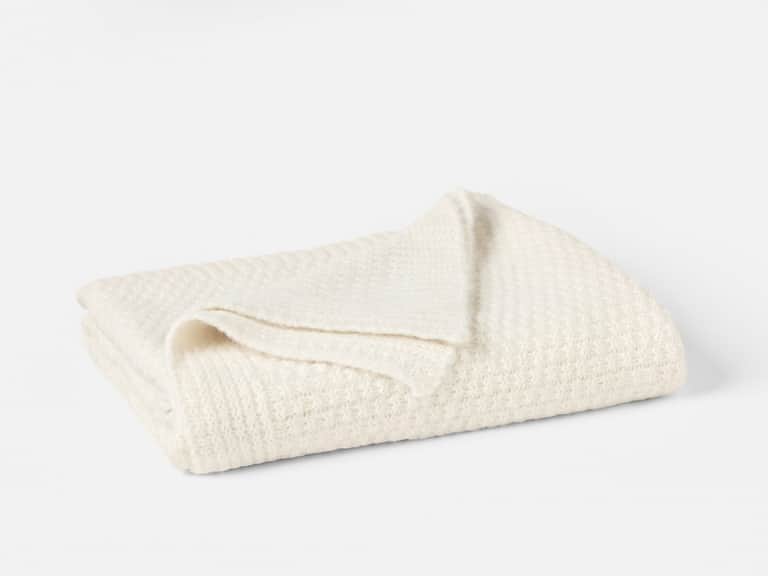
Open weaves and lighter fabrics are often practical in transitional weather because they can add a touch of warmth while remaining easy to fold back. A seed-stitch knit, for example, gives a fabric visible texture and some structure without necessarily creating the same dense coverage as a compact, heavy blanket. The Cordillera Alpaca Cotton Knit Throw, made with alpaca and Pima cotton in a seed-stitch construction, illustrates this kind of textured layer. Its blend and knit are useful details to consider when looking for a throw that offers warmth without a bulky appearance.
Summer: keep the option light
Warm-weather bedding often calls for fewer and lighter layers, but a spare throw can still be welcome in an air-conditioned room or during a cool spell. A fine, airy fabric is easier to lift away and fold aside than a heavy blanket. The goal is not to retain as much warmth as possible; it is to provide just enough coverage for comfort without making the bed feel sealed or cumbersome.
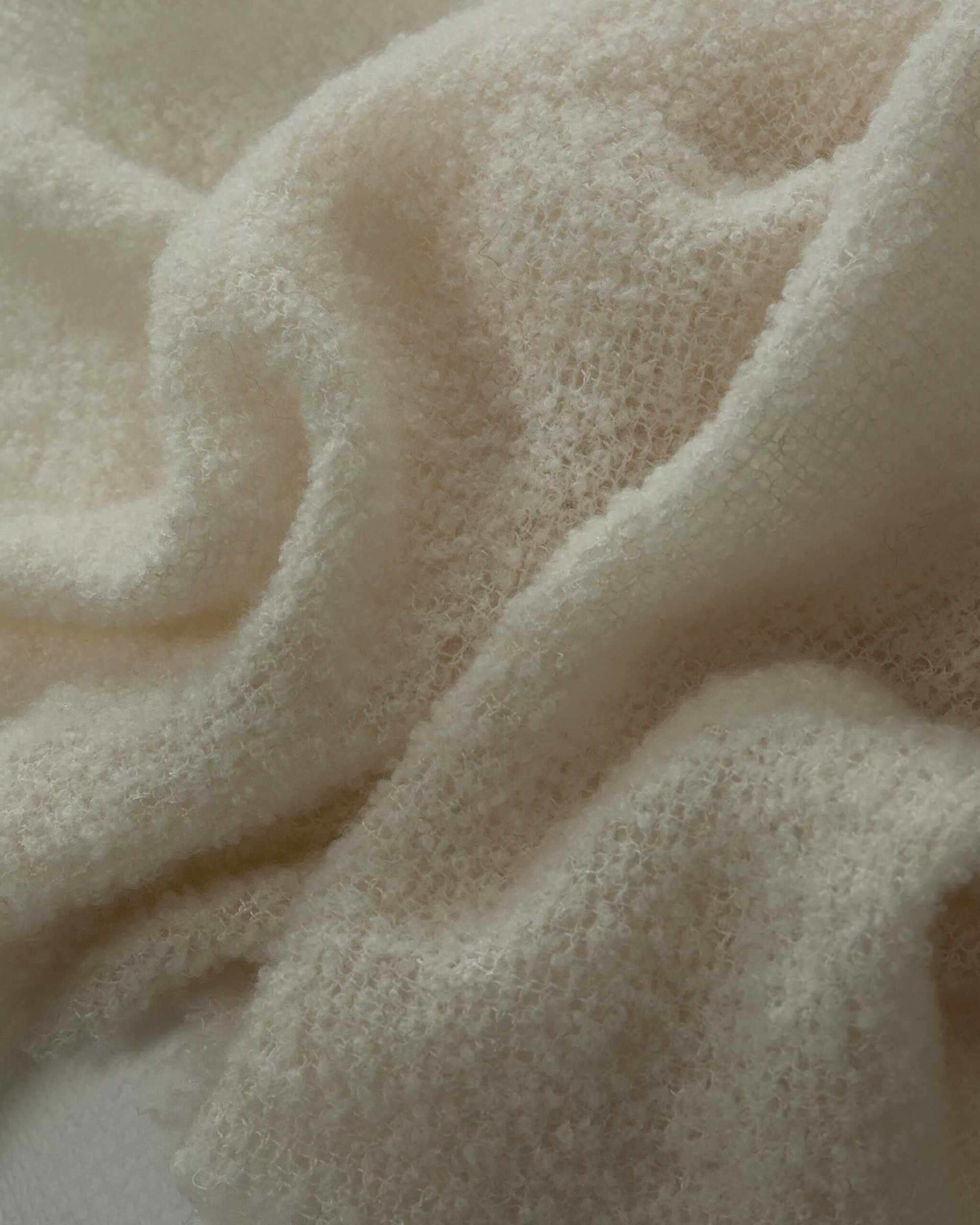
For a light drape, a gauze construction may be worth considering. The Mir Throw combines cashmere and silk in a gauze fabric. Its blend and light construction make it an example of how fiber and weave can create a different kind of layer from a dense winter blanket. As with any textile, the actual warmth experienced will depend on the room and the bedding beneath it.
Read the weave: texture is also structure
Weave and knit are not merely surface details. They describe how yarns are arranged, and that arrangement shapes how a fabric behaves. A tight plain weave generally presents a more compact surface than an airy gauze. Knits can stretch and drape in ways woven fabrics may not, while the stitch pattern can create texture, thickness, or openings in the cloth. These differences affect the way a throw settles on the bed and how easily it can be folded or moved.
When evaluating a throw, look beyond whether it appears “soft” or “cozy.” Ask whether the fabric is dense or open, whether it has a loose or compact structure, and whether its weight feels suitable for the job. A lightweight open weave may be pleasant as an occasional cover, but it may not block a draft as effectively as a closely constructed fabric. A heavy throw can feel reassuring on a cold night, yet become inconvenient if it must be removed repeatedly.
Texture can also affect how layers sit together. A smooth duvet and a textured knit create a clear contrast; two bulky or highly textured pieces may bunch against one another. A throw with an easy drape tends to fold more naturally and can be placed across the foot of the bed without creating a stiff ridge. The ideal arrangement is functional first: the layer should remain easy to reach, easy to move, and comfortable when it touches the sleeper.
Choose a size that supports the way you sleep
Size can determine whether a throw is genuinely useful. A small piece may work well for adding warmth to the feet or for a single sleeper who likes a narrow cover. A larger throw provides more flexibility: it can span a wider section of the bed, cover more of the body, or be folded over itself to create a thicker layer in a specific area.
To estimate what you need, consider the bed’s width, how much coverage is comfortable, and whether the throw will be shared. If two people sleep under the same bedding, a short throw may not remain positioned where either person needs it. If it is intended mainly as an extra foot layer, it does not need to cover the full mattress. Dimensions printed on a product description are more informative than general labels such as “throw,” since those labels are not a universal measurement standard.
Drape also changes with size and weight. A long throw can hang over the sides for a finished appearance, but an overhanging edge may be less practical if it catches under the mattress or drags near the floor. For overnight use, the fabric should be large enough to cover the intended area while remaining manageable to fold back each morning.
Try the layer in more than one position. Across the lower third of the bed, it is accessible for cold feet. Folded lengthwise, it creates a narrower band of targeted warmth. Spread over the main cover, it functions as a broader extra layer. A throw that can adapt to these uses may serve more of the year than one selected for a single, fixed arrangement.
Build a flexible system of textile layers
Effective seasonal bedding is a small system rather than a collection of unrelated blankets. Start with the layers that remain in regular use, then add pieces that can be removed independently. A fitted sheet, a breathable top sheet, and a suitable main cover form a base. The throw becomes an adjustable layer on top, allowing the sleeper to respond to changes in temperature without altering every part of the bed.
Keep the arrangement simple enough to manage. If a bed requires several heavy pieces to feel warm, it may be worth reconsidering the main cover or the bedroom’s temperature. Conversely, if a thick duvet is too warm for most of the year, a lighter core layer paired with a removable throw can offer more control. The purpose of textile layers is not to maximize their number, but to make comfort adjustable.
Material blends can contribute different characteristics to a fabric. A throw combining alpaca and cotton, for instance, brings together two fibers with distinct qualities, while a cashmere-and-silk gauze has a different hand and structure from a dense pure-fiber blanket. A label gives the composition, but construction and care instructions complete the picture. The Cordillera throw’s alpaca-cotton blend and the cashmere-silk Mir Throw are examples of how composition alone does not define a layer; knit or weave matters just as much.
Blending textures can also make a bed feel more inviting without adding much visual weight. A smooth sheet, a softly textured blanket, and a knit throw create distinct surfaces. For a calm appearance, keep the palette limited and let the differences in texture provide interest. For a more varied look, use contrasting tones, but ensure the practical layer remains easy to identify and reach.
Care affects how a throw performs over time
A seasonal layer often moves between the bed, a chair, and storage, so care is part of its usefulness. Before washing or cleaning any throw, follow the instructions on its label. Natural fibers and delicate constructions may require different handling from washable cotton or synthetic blends. A dry-clean-only instruction should not be replaced with a home-washing method simply because another textile in the same fiber category can be washed.
Between cleanings, regular airing can help refresh a throw. Shake it gently, allow it to air in a protected space, and avoid leaving delicate fibers in prolonged direct sun, which may affect color. If the throw is used nightly, consider rotating it with another layer so it can rest between uses. Small habits can reduce unnecessary laundering and help preserve a fabric’s shape and surface.
Store seasonal bedding clean and fully dry. Fold it rather than compressing it tightly for long periods, and use a clean, breathable storage space. Keep it away from damp areas and strong odors. When warm weather arrives, storing a winter throw properly makes the next change of season simpler—and reduces the chance that the fabric will emerge creased, musty, or in need of urgent care.
Care requirements are also a practical part of choosing a textile. A throw that feels ideal but needs maintenance you cannot realistically provide may not be the best everyday layer. Read the care details alongside the fiber and dimensions, then consider how often the piece will be used and where it will live.
A simple seasonal layering routine
When temperatures begin to change, adjust the bed in stages rather than switching abruptly from a heavy winter arrangement to a bare summer one. First, remove or fold back the warmest additional layer. After a few nights, assess whether the main cover is still comfortable. Keep a lighter throw nearby for cool evenings, especially during periods when indoor temperatures fluctuate.
- Notice the room: Consider nighttime temperature, drafts, heating, and air conditioning—not only the daytime forecast.
- Check the current bedding: Identify whether discomfort comes from the main cover, the sheet, or a specific area such as the feet.
- Add or remove one layer: Change one element at a time so the effect is clear.
- Test the placement: Use the throw where warmth is needed, and make sure it stays within reach.
- Reassess after several nights: A comfortable arrangement should work over the full night, not just at bedtime.
This routine keeps seasonal bedding responsive. It also helps distinguish between a need for more insulation and a preference for a different feel. Sometimes a light layer at the foot solves the problem; sometimes the fabric’s weight or the room’s draft is the more important factor.
Comfort is a balance, not a weight contest
The warmest-looking bed is not necessarily the most comfortable. Too many layers can restrict movement, collect heat, and make it harder to regulate temperature through the night. Too few may leave a sleeper reaching for a cover at every shift in the weather. A good bed throw occupies the useful middle ground: it adds warmth when needed, can be moved without effort, and fits naturally with the rest of the bedding.
Choose by function, then refine by feel. Consider whether you need a small foot warmer or a larger cover; whether the fabric should be airy or dense; whether a knit or woven construction suits the room; and whether the care instructions match your routine. Fiber gives important information, but it is only one part of the decision. Weave, weight, size, and placement turn that information into a layer that works.
Across the seasons, the most adaptable bedding is rarely the most complicated. A dependable base, one or two thoughtfully chosen textile layers, and the habit of adjusting them as conditions change can make a bedroom feel comfortable from the first cool evening of autumn to the last chill before spring. The throw at the foot of the bed may look like a quiet finishing touch. In practice, it is a simple tool for responding to the small, shifting weather of the night.
At a glance: choosing a bed throw
- Define whether the throw is for targeted warmth, full coverage, seasonal transition, or decoration.
- Read fiber content alongside construction; weave and knit influence weight, air movement, and drape.
- Choose a size that matches the intended coverage and whether the throw will be shared.
- Use lighter or more open constructions when you want an easily removed layer; consider denser fabrics when you need more insulation.
- Follow the care label and store seasonal layers clean and completely dry.