Nursery textiles · Infant sleepwear
A Breathable Nursery: Choosing Organic Cotton Sleep Sacks
A sleep sack can provide a wearable layer of warmth without adding a loose blanket to an infant’s sleep space. Choosing one involves more than softness or fiber labels: fit, construction, room temperature, laundering, and current safe-sleep guidance all matter.
Published October 6, 2026
In the quiet hours before dawn, a nursery is a small climate of its own. Air moves—or doesn’t—around the crib. A home’s heating system cycles on. A door opens, a window faces the morning, and the temperature shifts by degrees. For a baby, clothing is part of that changing environment. A sleep sack, sometimes called a wearable blanket, is designed to add a layer while staying on the body rather than lying loose in the sleep space.
That simple distinction explains the appeal, but it does not make every sack appropriate for every baby or every night. A garment must fit the child and follow its manufacturer’s age, size, and use instructions. The fabric can affect comfort, but no fiber, weave, certification, or product can guarantee safe sleep or prevent overheating. Caregivers should follow current guidance from pediatric health authorities and ask their child’s clinician about questions specific to their baby.
Organic cotton sleep sacks are one option among many. Understanding what the label says—and what it does not—helps families weigh material, knit structure, closures, and care with a clear eye. The aim is not to create a perfectly controlled nursery. It is to make informed choices and keep the sleep space simple.
What a sleep sack does—and does not do
A sleep sack is a garment made to be worn over sleep clothing. Its lower portion encloses the legs, while the upper section generally has openings for the arms and neck. Designs vary: some are sleeveless, some have sleeves, and some are quilted or insulated. Because a wearable blanket is attached to the child, it can be an alternative to placing a loose blanket in the crib, when the garment is designed and used according to its instructions.
It is not a substitute for the rest of a safe sleep environment. Pediatric safe-sleep recommendations generally call for placing an infant on their back for every sleep, using a firm, flat, non-inclined sleep surface with a fitted sheet, and keeping soft objects and loose bedding out of the sleep area. Follow the latest advice from recognized pediatric and public-health authorities; recommendations can be updated, and a clinician can help interpret them for an individual child.
A sack should never be used to restrain a baby’s arms or movement unless the specific product is intended for that purpose and its instructions and applicable safe-sleep guidance support its use. Swaddling and wearable blankets are not interchangeable. As infants develop and begin showing signs of rolling, caregivers should follow current pediatric guidance about stopping swaddling and choosing suitable sleepwear. A product’s marketing language cannot replace those considerations.
It is also important to distinguish sleep clothing from room climate control. A sleep sack does not regulate a room’s temperature, and a breathable textile does not remove the need to dress a baby appropriately. Check the manufacturer’s instructions, consider the room conditions, and watch the child rather than relying on a blanket formula that may not fit every home or infant.
Organic cotton: useful information, not a safety shortcut
Cotton is a plant-based fiber used in woven and knitted fabrics. In a sleep garment, its feel and performance depend on more than the name of the fiber: yarn, fabric weight, stitch structure, finishing, garment design, and laundering all contribute. Cotton can be soft against the skin, but “cotton” alone does not tell a caregiver whether a sack is light or warm, stretchy or firm, or suitable for a particular temperature.
The word “organic” refers to how agricultural inputs are managed under a defined standard. It does not, by itself, describe the thickness of the finished fabric, establish a garment’s size or fit, or mean that the finished item has no chemical processing. When a product carries a certification, read the certification details and determine what part of its supply chain or production the standard covers. Different certifications address different issues; they are not interchangeable, and none is a substitute for product instructions or safe-sleep guidance.
Undyed fabric may appeal to families seeking a simple color and finish, but it should not be treated as inherently safer for sleep. A color or fiber claim cannot establish that a garment will fit correctly, keep a baby at a comfortable temperature, or remain in good condition after washing. Look for clear specifications, care directions, and a seller or manufacturer that identifies how the garment is intended to be used.
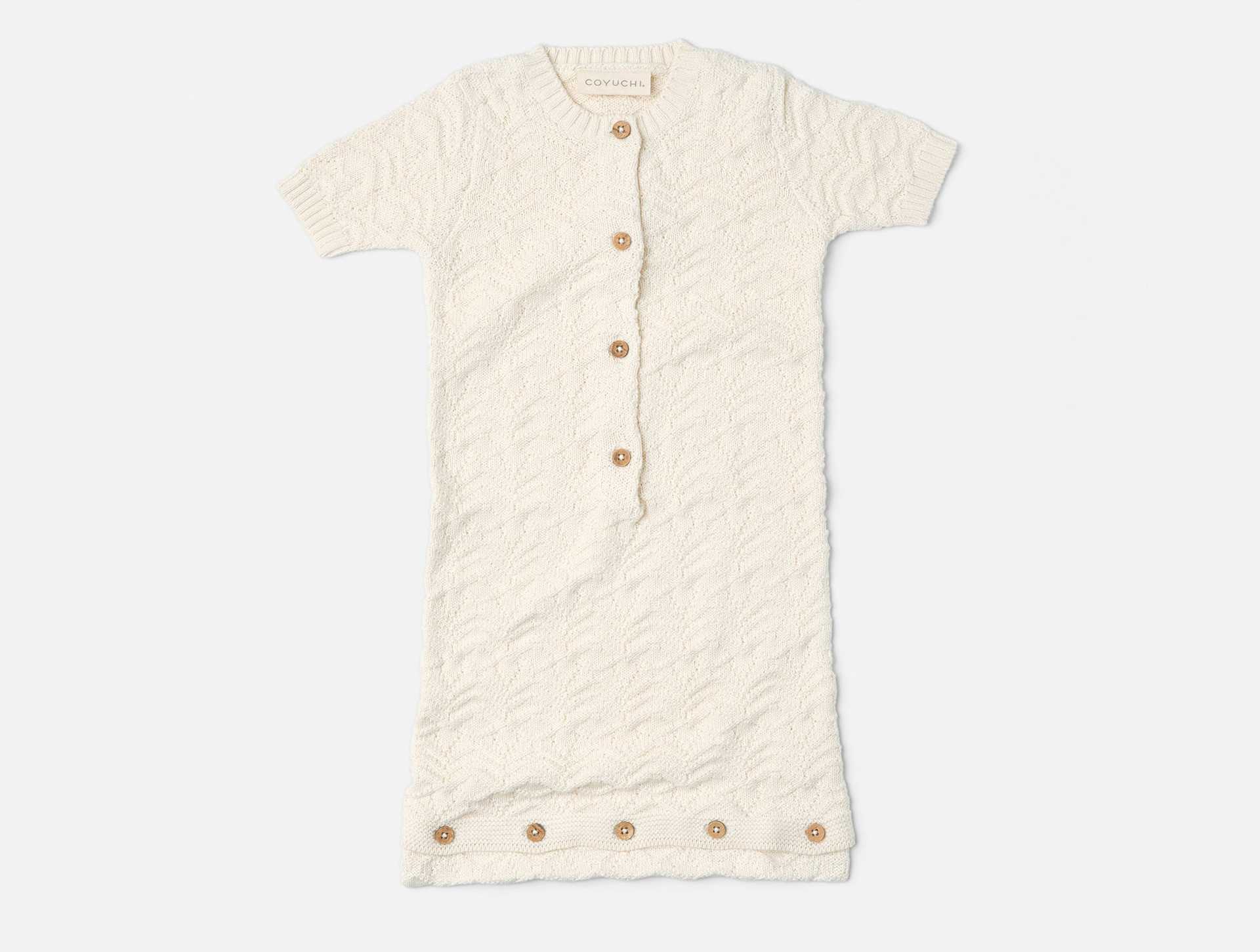
For readers comparing a specific example, the Wren Organic Knit Snuggle Sack is described as a 100% GOTS-certified organic cotton knit, with an undyed finish and Fair Trade certification for its factory. Its listed details also include rib-knit accents, a front button placket, a bottom opening, and cold gentle-cycle washing instructions. Those facts help describe its materials and construction; caregivers should still check its size, use directions, and current safe-sleep recommendations before use.
Reading the knit: texture, stretch, and weight
A knit is made from interlooped yarns, a structure that often gives fabric more stretch than a comparable woven cloth. That flexibility can make a garment easier to pull on and may help it move with a baby. But knits vary considerably. A fine, open stitch and a dense, substantial knit can both be cotton while providing different amounts of coverage and warmth.
Texture is another part of the experience. Ribbing, seed stitches, novelty stitches, and smooth jersey each create a different surface and degree of elasticity. Textured details may be attractive and can help shape a garment, but they do not automatically make it more breathable or more comfortable. Check the inside as well as the outside for seams, labels, and closures that could rub or irritate. The child’s response matters: a garment that leaves persistent marks, seems restrictive, or causes discomfort should be reassessed.
Fabric weight is often more informative than a broad description such as “cozy.” Some sleepwear is made for light layering; other designs include extra material or insulation. If a product lists a weight, use it as one point of comparison rather than a stand-alone measure of warmth. Construction, cut, and the layers worn underneath also influence how warm a baby may become.
“Breathable” is a common description for baby textiles, but it is not a complete performance specification. Air and moisture movement depend on the fabric and finished garment, as well as the layers around it. A breathable material can still be too warm if the sack is heavy or paired with too much clothing. The safest practical approach is to consider the whole sleep setting, follow the garment’s instructions, and avoid treating any marketing term as a medical assurance.
Fit is a functional detail
Fit affects both comfort and how a sleep sack stays positioned. A sack should match the manufacturer’s size guidance for the baby’s height, weight, and developmental stage, as specified on its label or packaging. Do not choose a larger size simply to extend its use. A garment that is too large may not sit as intended around the neckline or arm openings; one that is too small may restrict movement or feel tight.
Check that the neck opening is designed to prevent the baby from slipping inside the garment, while avoiding a fit that presses or rubs. Armholes should allow movement without being so large that the garment rides up. The body should have enough room for comfortable leg movement, in keeping with the product’s design and size instructions. If a sack has a zipper, snaps, buttons, or a placket, inspect how those components close and whether the closures remain secure.
Button placement and openings can also affect everyday handling. A bottom opening, for example, may make a diaper change more convenient, but caregivers still need to use it as directed and return the garment to its intended condition before sleep. After dressing the baby, check that fabric is not twisted, bunched, or folded near the face and that closures are fastened according to the instructions.
Babies grow quickly, and the right size can change between seasons—or between laundry days, if a garment shrinks. Recheck fit periodically rather than assuming that last month’s size remains suitable. If the label is missing, the fabric is badly stretched, or the garment’s dimensions have changed, consider replacing it instead of guessing whether it still fits correctly.
Layering with the room in mind
Nursery temperatures vary with climate, building design, heating, ventilation, and the time of day. A single chart cannot account for every home, garment, or infant. Manufacturer guidance may describe how to layer with a particular product, but families should read it carefully and seek advice from a pediatric clinician when they are unsure, especially for a newborn or a baby with specific health needs.
Rather than adding layers because a caregiver feels cold, assess the baby and the room. The hands and feet may feel cooler than the torso and are not always reliable indicators of the baby’s overall warmth. A caregiver can check the chest or back of the neck and watch for signs that the child may be too warm, such as a hot or sweaty torso, flushed skin, or damp hair. These observations do not replace medical advice. If a baby seems unwell or there is concern about overheating, contact a healthcare professional promptly.
Choose sleep clothing that works with the sack’s listed weight and design. Avoid piling on extra blankets or using hats indoors during sleep unless a clinician specifically advises otherwise. If the room becomes warmer, adjust the clothing layers in line with the product directions and pediatric advice. The goal is a comfortable, uncluttered sleep environment—not maximum insulation.
Seasonal changes are a useful reminder to reassess. A sack used during a cool spell may be too warm after the heating comes on or the weather turns. Keeping a simple note of room conditions and the clothing combination that seems appropriate can help caregivers communicate with one another, but it should not replace the baby’s cues, product instructions, or clinical guidance.
Care labels are part of the garment’s design
Repeated washing is ordinary life for infant sleepwear. Milk, drool, and diaper leaks can send a garment to the laundry often, so practical care instructions matter. A cotton knit may be washable, but the recommended temperature, cycle, detergent, drying method, and use of bleach or fabric softener depend on the specific item. Follow the sewn-in label and manufacturer guidance rather than applying a general rule for all cotton products.
For the Wren Organic Knit Snuggle Sack, the listed care guidance is a cold wash on a gentle cycle with like colors, followed by low tumble drying; it also advises removing the garment promptly and allows warm ironing if desired. These instructions are product-specific. Other sleep sacks may require a different method, so check the label each time you introduce a new garment to the wash.
Before laundering, fasten closures as directed and check pockets or openings for small items. Use a detergent suitable for the household and follow its instructions; fragrance-free products may be a preference for some families, but no detergent choice guarantees that irritation will not occur. If a baby develops a persistent rash or skin reaction, pause use of the suspected item and ask a healthcare professional for guidance.
After washing, inspect the sack while it is dry. Look for loose threads, damaged seams, stretched neck or arm openings, broken closures, or thinning areas. Follow the manufacturer’s advice about repairs and replacement. A garment that no longer keeps its intended shape or secure fit should not be treated as suitable simply because it remains soft.
A considered checklist for choosing an organic cotton sleep sack
When comparing infant sleepwear, move from broad claims to practical details. A short checklist can make product descriptions easier to evaluate:
- Purpose: Confirm that the garment is designed as a sleep sack or wearable blanket and understand the manufacturer’s intended age and use.
- Fit: Use the stated size range and check the neckline, arm openings, and body length against the baby’s current measurements and developmental stage.
- Material: Read the fiber composition. If organic status matters to you, review what the named certification covers rather than relying on the word alone.
- Construction: Consider knit density, stretch, seams, closures, and any openings. Check both the inside and outside for details that may affect comfort.
- Weight and layers: Look for specific product guidance about fabric weight or layering, then consider the room and the clothing worn underneath.
- Care: Make sure the washing and drying directions fit your household routine, and inspect the garment after laundering.
- Condition: Avoid using a sack that is damaged, altered, stretched out, or missing essential instructions needed to verify its fit and use.
- Safe-sleep context: Keep following current pediatric recommendations for sleep position, the sleep surface, and what belongs in the sleep space.
This checklist does not rank materials or guarantee a particular outcome. It helps separate verifiable features—fiber content, dimensions, care steps—from broad claims about softness, purity, or safety.
A quieter, clearer nursery
Preparing a nursery often means making many small decisions about fabric, temperature, and routine. A sleep sack is one of them. Organic cotton may appeal for its fiber source and feel; a knit may offer stretch; a thoughtful closure may simplify changing. Yet the most useful garment is not necessarily the one with the longest list of adjectives. It is the one whose specifications are clear, whose size and use match the baby, and whose care instructions can be followed.
Keep the sleep space simple, use a firm, flat surface with a fitted sheet, and place the baby on their back for sleep in line with current pediatric guidance. Choose layers with the room and the product directions in mind. Recheck fit as the baby grows, and inspect sleepwear after every wash. When a question turns on the child’s health, development, or an uncertain sleep situation, a pediatric professional is the right source of individualized advice.
In a nursery, comfort is not a single property hidden in a fiber label. It is the result of a garment meeting a child, a room, and a routine—with careful choices and safe-sleep practices holding the pieces together.